

Microplastics Found at Depths of Up to 2,450 Meters Along the Indonesian Throughflow
- Jun 8
- 1 min read
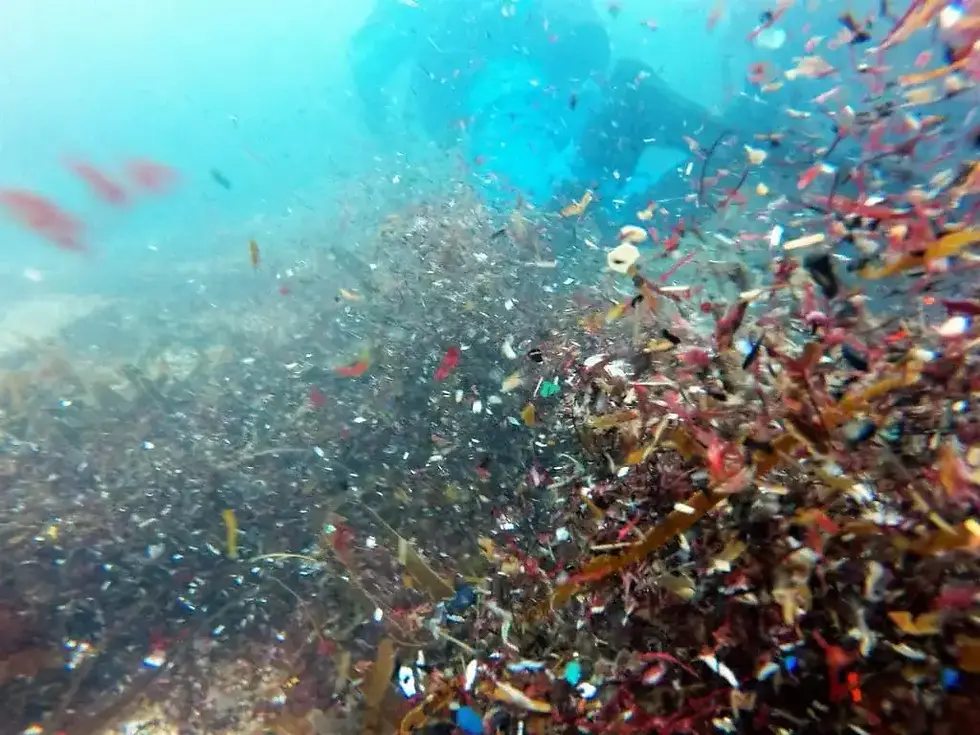
A study published in the journal Marine Pollution Bulletin revealed that microplastics have reached depths of approximately 2,450 meters along the Indonesian Throughflow (ITF), which connects the Pacific Ocean and the Indian Ocean. The study, led by BRIN researcher Corry Yanti Manullang, analyzed 92 seawater samples from 11 observation stations ranging from the Makassar Strait to the Lombok Strait. From a total of 872 liters of seawater analyzed, researchers identified 924 microplastic particles with an average concentration of about 1.062 particles per liter. More than 90% of the particles were fibers, typically originating from synthetic textiles, and included polymers such as polyester, polypropylene, and polyurethane. These findings suggest that the deep sea may serve as an accumulation zone for microplastics transported by ocean currents.
Further research also indicates that microplastics have entered the marine food chain. In a study published in the journal Sains Malaysiana, microplastics were found in the bodies of small zooplankton called copepods along the Indonesian Throughflow pathway. Out of approximately 6,000 copepod individuals analyzed, researchers detected 133 microplastics particles, with an average ingestion rate of around 0.022 particles per individual. As copepods are a key food source for many fish species, microplastics may transfer through the marine food chain an eventually be consumed by humans. These findings highlight that plastic pollution is not limited to coastal areas but has already reached deep-sea ecosystems, requiring more extensive research and stronger management efforts.
Source:


